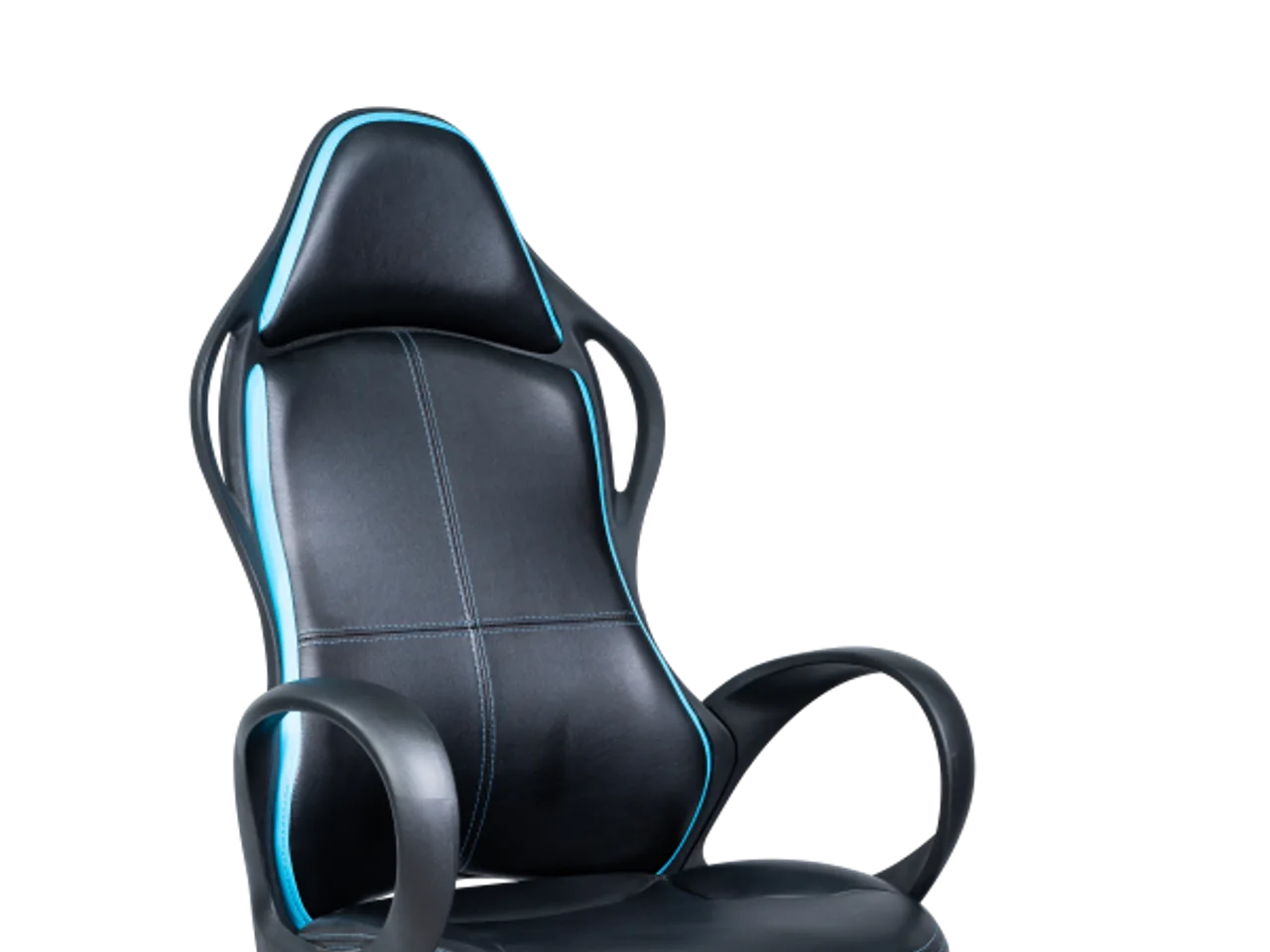
Training rooms, banquet halls and seminar spaces buy chairs by the hundred and then store them for most of the year. So the spec that matters is not how the chair feels for the ninety minutes it is in use — it is how it behaves the rest of the time, folded into a cupboard or rolled into a corner. Stacking and nesting answer that differently.
Stacking and nesting are not the same thing
A stacking chair piles vertically — one seat into the next, ten or so high on the floor or onto a dolly. It is efficient when you have a tall, narrow storage closet and want to use the ceiling. A nesting chair has a folding seat and a frame designed so the chairs roll into each other front-to-back, like supermarket trolleys, and park against a wall on their own casters. Nesting needs far less ceiling clearance and no lifting, which matters when the people resetting the room are not warehouse staff.
The practical split: stacking wins where storage is a vertical closet and labour can lift; nesting wins where storage is a low corridor and the room gets reset by event staff who should not be hauling chairs overhead.
The number suppliers do not volunteer: how high you can actually stack
"Stackable" with no number is a half-answer. A serious manufacturer establishes a sensible stack count and a recommendation for whether to stack on the floor or on a dolly — BIFMA's own stack-chair guidance exists precisely because piling chairs too high is a stability and damage risk, not a feature to maximise. We quote a realistic stack height and tell you to use a dolly above it, rather than printing a big number that ends in scratched chairs and a toppled stack. Ask any supplier for the rated stack count before you confirm; if they cannot give one, the chair was not engineered to stack, it just happens to.
Frame and shipping: why stacking chairs travel well
There is a freight angle that quietly favours stacking. A chair designed to stack ships stacked, ten or so to a column, so a 40-foot high-cube swallows a lot more of them than it does assembled swivel chairs that waste the space under each seat. That keeps the cost-per-chair-landed low, which is exactly why training and banquet buyers order stacking by the hundred. The frame decides whether that economy lasts: a chromed or powder-coated steel tube around 1.5 to 2.0 mm wall takes the abuse of repeated stacking and dragging, where a thin tube dents and the chrome flakes at the contact points after a season. Polypropylene shells stack lighter and shrug off spills, but a cheap PP shell goes brittle and cracks at the seat-to-leg joint under cold storage. We quote the tube wall and the shell material rather than leaving "metal frame" to mean whatever is cheapest that month.
The trade-off in one paragraph
Here is the genuine tension. A light four-leg stacking chair is the cheapest per unit and packs tightest in a container, but every reset means lifting, and a stack above the rated height bends frames over time. A nesting chair with a folding seat costs more per unit and takes more cubic metres to ship — those casters and folding mechanisms are not free — but it resets in seconds with no lifting and parks in a low space. For a venue that resets daily with casual staff, the nesting chair is cheaper over its life even though it is dearer on the invoice. For a chair stored ten months a year and set up by a maintenance crew, plain stacking is the right bet.
A dolly is the cheap accessory that saves the chairs. Stacking ten chairs on the floor puts the whole weight of the column on the bottom seat and frame, and over hundreds of stack-unstack cycles that bottom chair tires first; a transport dolly spreads the load, rolls the stack to storage in one trip, and keeps the floor contact off the seat surface. We quote the dolly with the chairs rather than letting a buyer discover later that resetting a 200-seat hall by hand is a two-person job. We build training, visitor and stacking frames inside our conference and meeting seating range, and where the same room hosts dining or events we cross-check against multipurpose seating options so one frame does not get asked to do a job it was not rated for. For a room that doubles as overflow desk space, we line the frames up against our office-chair platforms so seat heights match.
Tell us the room count, how often it resets, who resets it, and your storage height, and we will spec stack-vs-nest and give you a rated stack count in writing. We build to BIFMA/EN methods and testing can be arranged per order. Reach us via the contact form or [email protected].