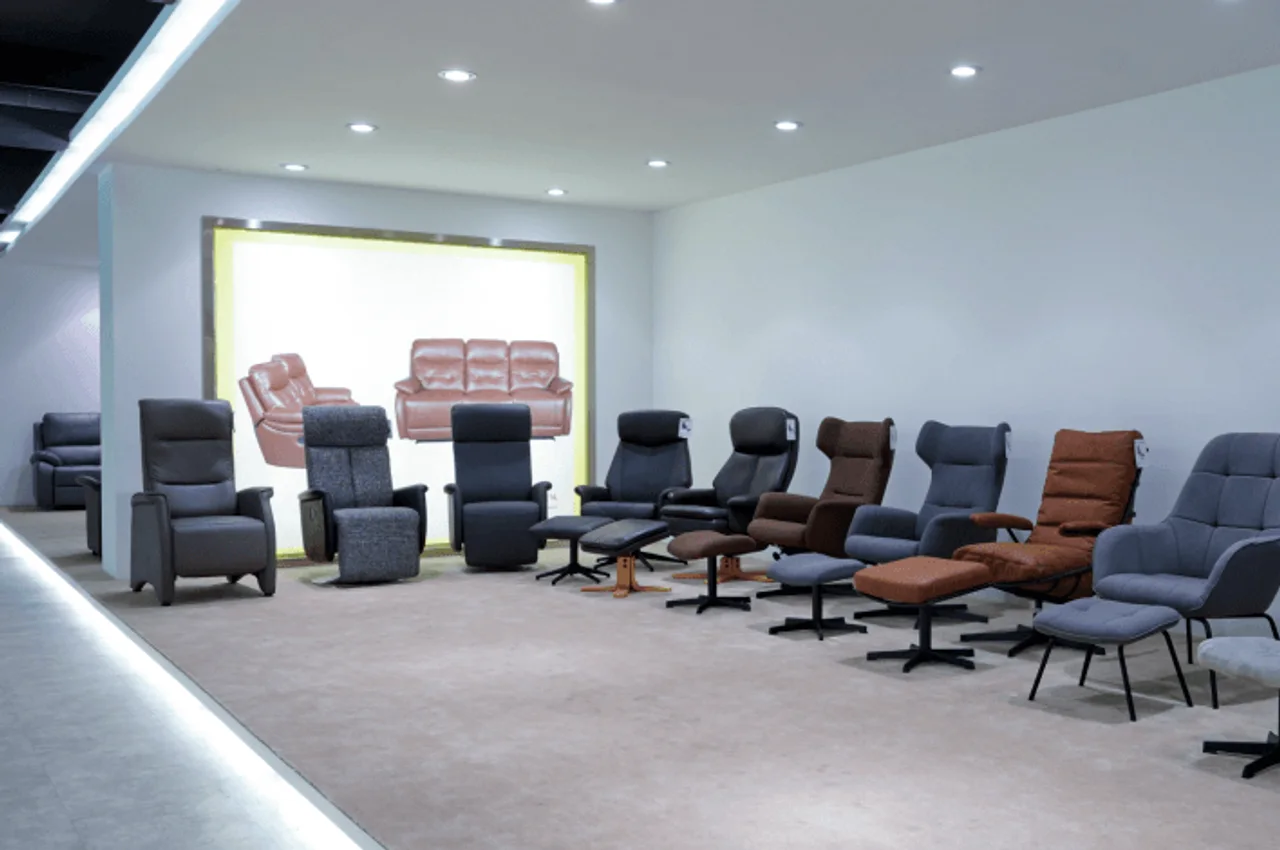
Executive boardroom chairs get bought on the badge and the leather, which is fine until the meeting runs two hours and the chair turns out to be a static throne with no recline worth the name. The decisions that age well are duller than the leather: back height, tilt type, and whether the chairs match around the table. Those are the three I push buyers to settle first.
Mid-back or high-back is a presence decision and a comfort one
A high-back executive chair carries the head and signals seniority — it looks like the chair at the end of the table, and in a formal boardroom that matters. A mid-back chair ends below the shoulders, looks lighter, and works better around a table where you want visual consistency rather than a hierarchy of thrones. There is a comfort angle too: a high back only helps if the user actually leans into it, and for short, brisk meetings a mid-back is plenty. The mistake is buying twelve high-back chairs for a room where eleven people never recline.
The tilt is the part doing the real work
"Reclining executive chair" covers two very different mechanisms. A cheap knee-tilt or simple back-tilt pivots from one point and lifts your feet as you lean — fine for a quick lean-back, tiring over an hour. A synchro-tilt moves the seat and back together at a set ratio and keeps your feet planted, which is what holds someone comfortably through a long board meeting. Synchro costs more. For the chair at the head of the table and for any room where meetings run long, it is the upgrade that earns its money; for visitor chairs around the same table, a simpler mechanism is honest value.
The parts under the leather that decide year three
An executive chair lives or dies on the parts a buyer never photographs. The gas lift should be a heavier class on a chair that carries a big user all day — we pair an executive seat with a Class 4 cylinder rather than the Class 3 that suits a light task chair, because a sinking executive chair in a board meeting is the complaint that gets escalated. The base belongs in aluminium, polished or painted, on a flagship chair: it is stronger than nylon, it looks the part under leather, and it does not crack at a spoke when a heavier director drops into it. Seat depth matters more on a recliner than on an upright chair — a sliding seat that adjusts 50 to 60 mm lets a tall and a short director share the same model, where a fixed deep seat leaves shorter people perched on the front edge. None of this shows in the brochure photo; all of it shows in the second year.
The trade-off: leather looks the part, mesh survives the glass wall
Here is the call, said plainly. A bonded or top-grain leather high-back looks like a boardroom and photographs well, and for a flagship room it is the right finish. But a modern boardroom is often a glass box that heats up under ceiling lights and afternoon sun, and leather traps that heat — people sweat through the meeting they are trying to look composed in. In a hot, glazed room, a high-back mesh executive chair runs cooler and still looks the part. We have specced leather for the formal board and mesh for the glass-walled meeting room in the same building, matched in colour and arm style so they read as one family.
There is a budget tactic here that buyers like once they hear it: you do not need twelve identical high-back leather thrones around a board table. One statement chair at the head and a set of matched but plainer chairs for the rest reads as more considered, not less, and it moves real money out of chairs nobody reclines in and into the one chair that gets photographed. The matching principle is the point. Specify the head-of-table chair, the table chairs and any visitor and meeting chairs as a set, sharing arm height and seat height, so the room looks designed rather than assembled. Where the executive also has a private office, we line the boardroom chair up against our daily office-chair range so their two chairs do not clash.
Tell us the room — formal board or working meeting room, glazed or not, how long meetings run — and we will spec back height, tilt and finish as a matched set. We build to BIFMA/EN methods and testing can be arranged. Start at our contact page or email [email protected]; our OEM/ODM team handles matched room sets every week.