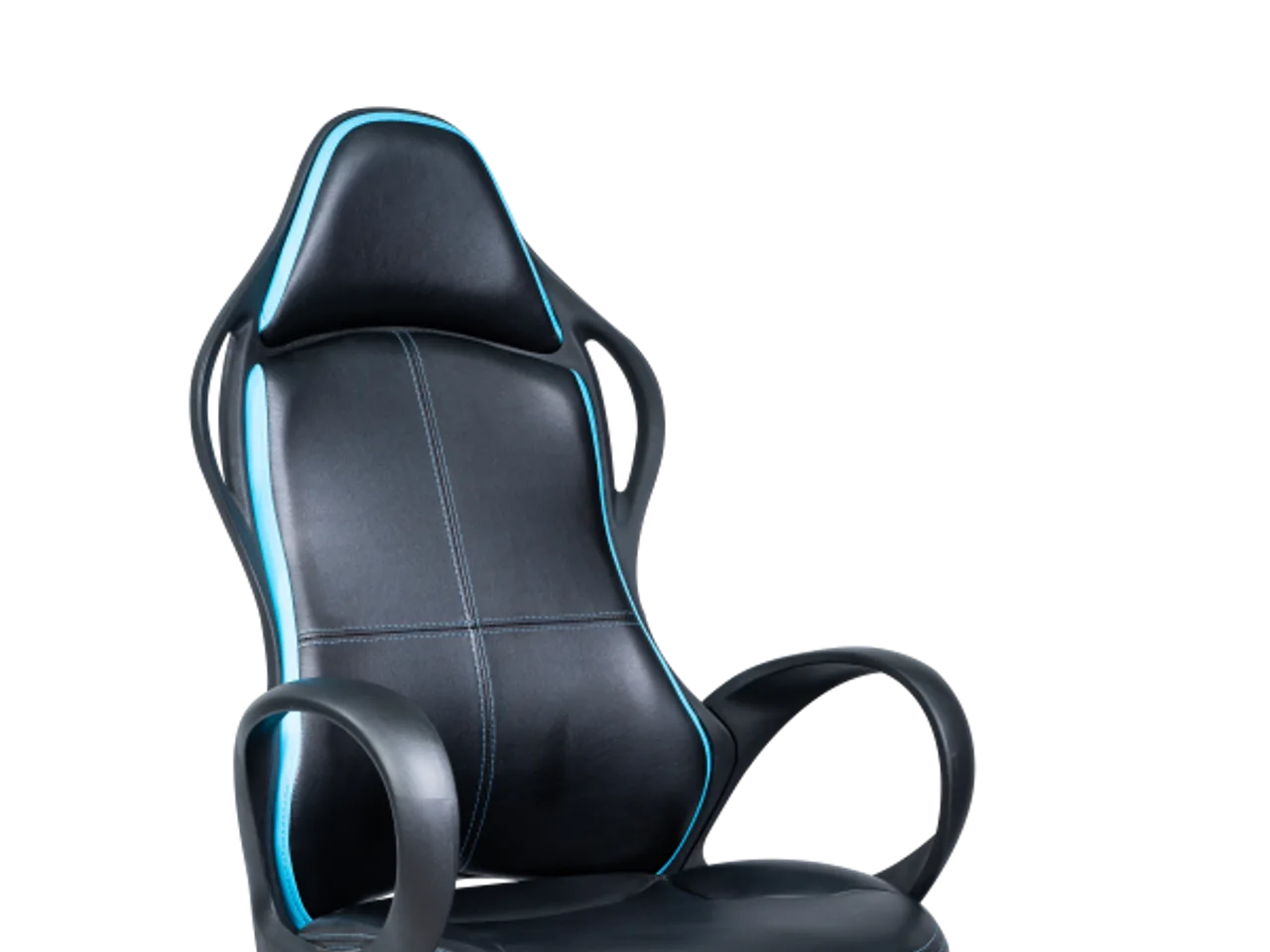
The hardest seating brief we get is not the executive boardroom or the gaming lounge — it is the multipurpose room. One space that hosts training on Monday, a staff lunch on Tuesday, a town hall on Thursday and a supplier event on Friday. The buyer wants one chair for all of it. We can do that, but only if everyone agrees up front that the chair will be good at all four jobs and perfect at none.
What "multipurpose" is really asking the chair to do
Each use pulls the spec a different way. Training wants a chair you can sit in for two or three hours with a bit of back support and maybe a writing tablet. Dining wants something easy to wipe and quick to line up. A town hall wants light chairs you can set out by the hundred and clear fast. An event wants the room to look decent in photos. A congress-style multipurpose chair is the usual answer — rated for multi-hour sitting, with a light seat pad for comfort, on a frame that stacks or links so a hundred of them reset quickly. It is a deliberate compromise, and a good one.
The reset is the hidden cost
The number that decides whether a multipurpose room works is not comfort, it is reset time. A chair that links into rows for a town hall and unlinks for dining, or stacks ten high and rolls away on a dolly, turns a room over in minutes. A chair that has to be carried one at a time turns the same job into an hour of staff time, twice a day, forever. When we quote a multipurpose chair we quote the reset method too — link bars, stacking dollies, glide feet for hard floors — because that is where the running cost actually sits.
Linking, row alignment and the floor underneath
For any room that runs in rows — a town hall, a seminar, a screening — linking hardware turns a scatter of chairs into tidy, regulation rows in one motion. Ganging clips that join chair to chair keep the aisle spacing legal and stop the front row from creeping forward during a long session; in many venues a fixed row spacing is not a nicety but a fire-egress rule. The flip side is that linked rows do not reconfigure into a U-shape for a workshop, so a multipurpose chair usually offers clip-on, clip-off linking rather than a welded gang. The floor matters too: casters suit a carpeted training room, glides suit a hard-floor hall, and the wrong foot either scuffs the floor or refuses to slide. We quote the linking method and the foot type to match your actual floor, because a chair that fights the floor it sits on is a daily irritation that no spec sheet captures.
The trade-off, said plainly
Here is the compromise in one paragraph. A dedicated training chair is more comfortable than a multipurpose one; a dedicated dining chair wipes cleaner; a dedicated event chair stacks tighter. The multipurpose chair gives up a slice of each so one SKU covers the room — which saves you buying and storing four different chairs and means the room always matches itself. That is the right bet for a room with a genuinely mixed schedule. It is the wrong bet for a room that is really a training room with the occasional lunch; in that case, buy training chairs and rent event chairs for the two days a year you need them. We will tell you which situation you are actually in.
Weight is the spec that makes or breaks the daily reset, and it is worth putting a number on. A multipurpose chair that one person can carry two at a time — broadly under about 5 kg for a stacking shell, a little more for a padded frame — turns a room over fast; a heavier, plusher chair needs two hands per chair and slows every changeover, which is fine for a room reset twice a week and painful for one reset twice a day. We will quote the per-chair weight, not just the comfort, because the people resetting the room feel that number every single time. The consistency point matters too: pick one colour and one frame finish so a half-set-up room still looks intentional rather than scavenged. We build multipurpose and stacking frames within our conference and meeting range, and where the room also serves as overflow office space we line them up with our office-chair line so seat heights match.
Send us the room's weekly schedule and how it resets between uses, and we will spec one chair that handles it honestly, with the reset hardware costed in. We build to BIFMA/EN methods and testing can be arranged. Reach the desk via our contact form or [email protected]; our OEM/ODM workflow can match one design across a whole building.