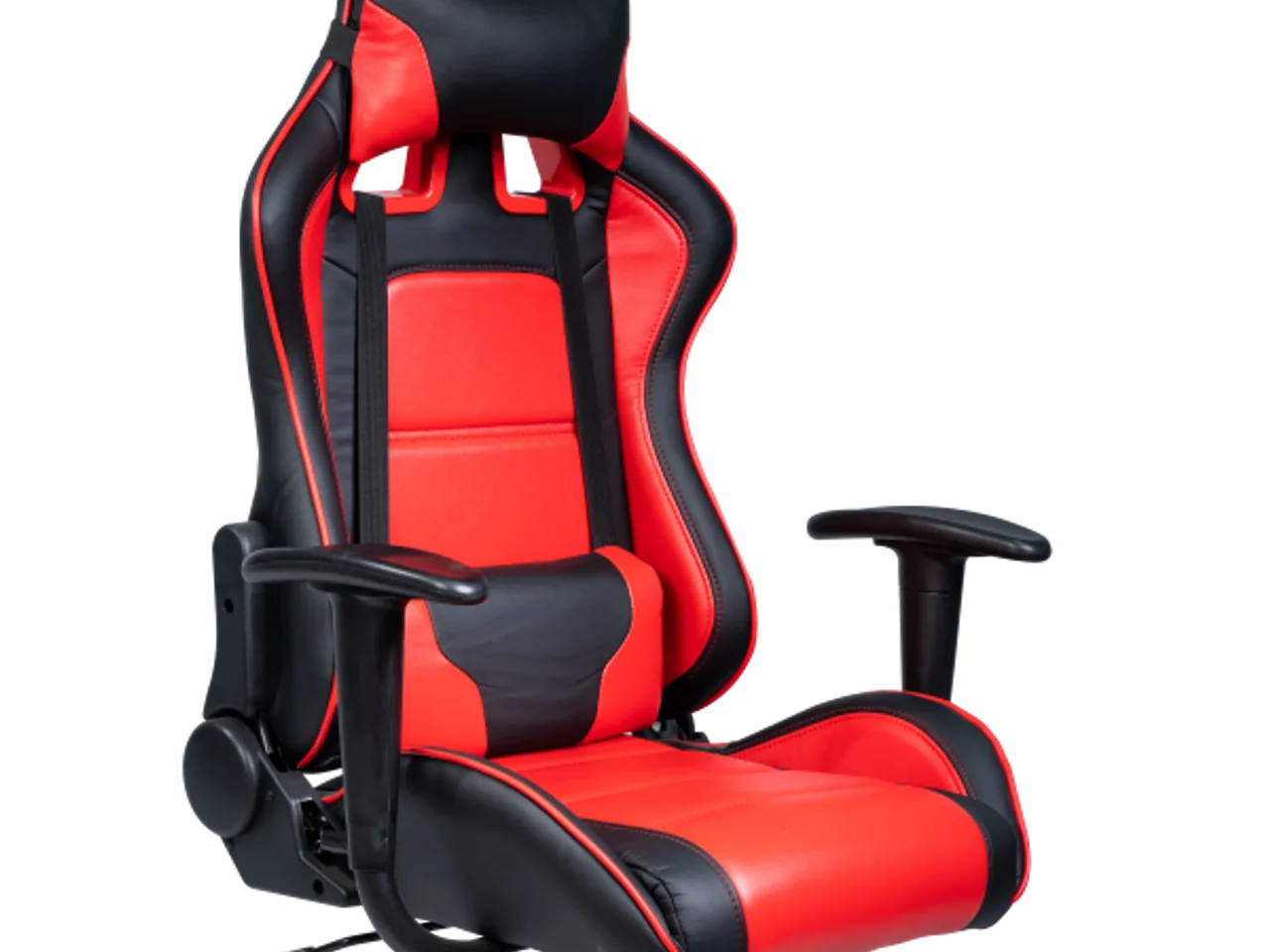
We make office chairs and we make gaming chairs, so we have no reason to tell you one is better. They are different chairs for different buyers, and the confusion is mostly a marketing problem: a "gaming" label gets stuck on a chair that is sometimes an office chair in a louder jacket. Here is how we keep the two straight when we quote.
The bucket seat is the real divider
A racing-style gaming chair has a high back with raised side bolsters — the bucket shape that holds you in place during long sessions. It usually comes with a removable neck pillow and a strap-on lumbar cushion, and it reclines hard, often to 135 degrees and sometimes flat enough to nap in. An office task chair has a flatter, wider seat, a back that ends lower, built-in lumbar rather than a strap-on pillow, and a recline meant for working, not lying down. Neither is wrong; they fit different bodies and different days.
For most office desks, reviewers who test seating for a living land on the same point: the office chair wins on long-term ergonomics and build, the gaming chair wins on looks and that enclosed, planted feel. If the chair sits under a monitor eight hours a day for paid work, the flat office seat is usually the healthier call. If it is for a gaming lounge, an esports room or a buyer whose customers want the racing look, the bucket seat is what sells.
The point buyers miss: the test standard
This is the trade-off worth spelling out, because it is the one that bites importers. Office chairs are routinely built and tested to workplace standards — ANSI/BIFMA X5.1 in North America, EN 1335 in Europe. A lot of gaming chairs on the market were never put through either, because they sell on appearance to consumers, not to procurement officers who read test reports. So when a gaming chair goes into a corporate office or a public esports venue, the buyer can suddenly need a report the product was never designed to pass — and verifying those certification claims before you commit is worth doing.
There is a warranty angle to the same point. A gaming chair sold to a consumer who games a few hours a week sees light duty, but the same chair in an esports café or a corporate breakout room gets sat in all day by different people, which is closer to contract office duty than to home use. If you are selling into that heavier channel, the chair needs the cylinder, base and mechanism of a contract chair even though it wears a gaming jacket — otherwise the returns land on you. We handle this by building our gaming-chair line to the same construction discipline as our office chairs — proper class gas lift, tested base, real recline mechanism — so testing to BIFMA or EN methods can be arranged per order rather than being impossible after the fact. We will not call a chair "certified," but we will not sell you a gaming chair that cannot be tested if your market asks.
Where the build quality actually differs
Past the looks, the parts buyers should compare are the same on both chairs, and this is where a cheap gaming chair quietly gets cheaper. The cover is the obvious one: a lot of budget gaming chairs use bonded PU that looks like leather and peels within a year or two of skin contact and sweat, while a fabric or a proper PVC holds up longer in a hot room. The seat foam matters more than the bolsters that hide it — moulded cold-cure foam around 45 to 55 kg/m³ keeps its shape, and the soft, cheap foam under a flashy cover flattens fast under a daily user. Then the recline: a real multi-position tilt with a metal mechanism and a tension control is a different part from a simple back-only flop, and the metal frame under the upholstery, not the racing stitching, is what carries the load. We spec these the same way on a gaming chair as on an office chair, because a buyer who finds out the difference through warranty claims does not order again.
How we steer a mixed order
If you sell into both consumer gaming and contract office, do not force one chair to do both jobs. We have shipped buyers a gaming SKU for retail and an ergonomic office chair for their B2B channel, on one container, sharing colourways so the brand looks consistent. That costs a little more than a single SKU and saves you the returns from selling a bucket seat to someone who needed a desk chair.
Tell us where the chairs are going — homes, offices, an esports venue — and whether you need a test report, and we will recommend the line and the spec. Reach the export desk via our contact form or [email protected].